Marine Services

Seawall & Piling Services

Seawall construction, sealing and shoreline repairs, plus wooden and concrete piling protection, rehabilitation and replacement for South Florida waterfront properties.
Common Seawall Concerns

Planning starts with the existing condition

  • Visible cracks, movement, settlement or deterioration
  • Erosion concerns and changes along the waterline
  • Seawall cap issues and elevation concerns
  • Questions about repair versus replacement
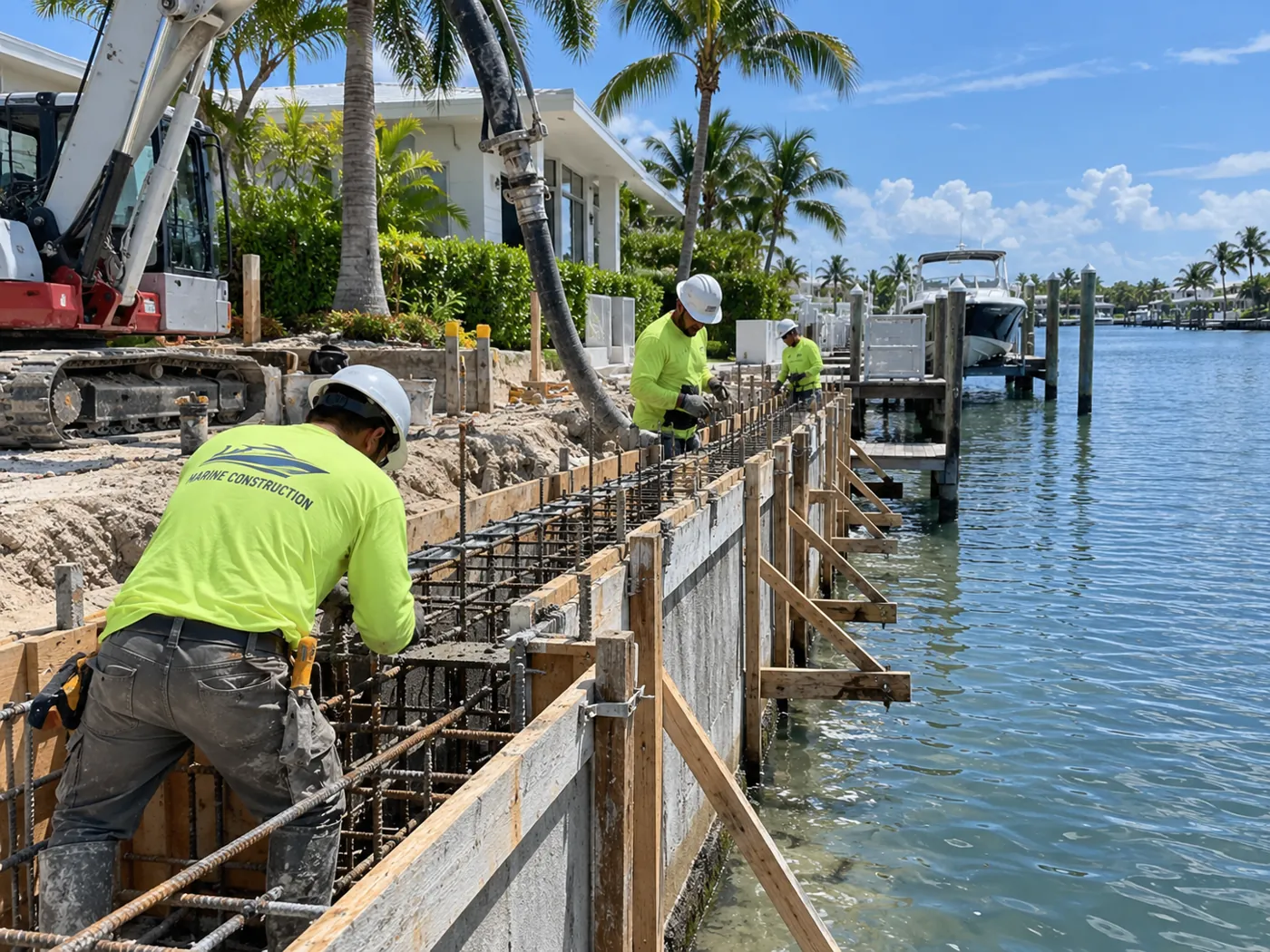
Illustrative seawall construction underway with workers and concrete reinforcement
Seawalls

Seawall construction, sealing & preservation services

Seawall Construction & Structural Repairs

Construction, replacement, cap repair and raising, and site-specific repair scopes. Structural concerns are reviewed for appropriate engineering, permits and qualified trades.

Seawall Joint & Expansion Joint Sealing

Evaluate failed or separated joints between seawall panels and at designed expansion joints. Where appropriate, prepare the joint and install a compatible marine-grade sealing system. Movement and water pressure must be considered before materials are selected.

Full Seawall Sealing & Protection

When conditions justify broader treatment, assess surface preparation, crack repair and compatible protective coatings or waterproofing systems for larger wall sections or the full seawall. Sealing alone does not correct structural instability or drainage defects.

Barnacle & Marine Growth Removal

Remove accessible barnacles, algae and other marine growth from suitable seawall and piling surfaces with cleaning methods selected to limit damage to concrete, coatings and adjacent habitat. Underwater work is separately evaluated and scoped.

Wooden & Concrete Pilings

Piling Protection, Repair & Replacement

A seawall protects the shoreline; pilings support docks and other waterfront structures. We evaluate timber and concrete piling conditions and explain when protection, rehabilitation, reinforcement or replacement may be appropriate.

Timber Piling Inspection & Protection

Visible splitting, soft wood, marine-borer activity, damaged wraps and movement can indicate problems. When the remaining timber is structurally sound, appropriately installed protective wraps can help reduce future marine-borer exposure. Wrapping does not restore lost load-bearing strength.

Concrete Jackets & Structural Repairs

Depending on the damage and site conditions, engineered concrete-filled jackets, reinforcement or supplemental pilings may offer alternatives to full replacement. Any repair intended to restore structural capacity requires appropriate design, load-transfer details and approvals.

Piling Removal & Replacement

Where timber is severely deteriorated or the structure cannot safely rely on an existing pile, replacement may be the more practical solution. We review access, dock connections, piling material, installation requirements and permitting before recommending a scope.

On-Site Work & Specialty Coordination

CoastalCore Marine performs suitable accessible work directly and coordinates qualified specialty contractors for projects needing specialized equipment or methods. Engineering, underwater work, permitting and regulated activities are separately scoped when required.

Need dock construction, railings or accessories? Visit our Docks & Pilings page for dock repairs, guardrails, ladders, cleats and related improvements.

Know the Warning Signs

When should you have your seawall evaluated?

Cracks & joint gaps

Cracked concrete, open panel seams or failed expansion joints may signal movement or pathways for water and soil migration.

Soil loss & drainage issues

Settling soil, depressions or voids landward of a wall warrant investigation of drainage, joints and possible erosion.

Leaning, movement & corrosion

Wall displacement, cap movement and exposed or rusting reinforcement can require structural assessment rather than surface sealing.

Not every visible crack means a complete replacement. The appropriate response depends on wall condition, soil and drainage behavior, engineering and the scope of damage.

A Closer Look

Seawall conditions & repair planning

Seawalls face tidal exposure, saltwater, drainage pressure and movement. The best approach starts by identifying the cause of deterioration—not assuming every crack needs the same repair.

Seawall construction and cap raising

New seawalls, replacement sections, cap rehabilitation and cap elevation changes require review of property conditions, applicable engineering and permitting. The scope depends on existing wall stability, access and shoreline conditions.

Panel joints, expansion joints and full-wall sealing

Open seams and failed joints may allow water or soil movement. We evaluate compatible sealants, surface preparation and whether local joint repair or a broader waterproofing treatment is warranted. Sealing is not a substitute for structural or drainage repair.

Marine growth and barnacle removal

Marine growth can obscure wall and piling surfaces. Cleaning methods must be selected for the substrate, protective finishes, water access and environmental restrictions; any underwater work is evaluated separately.

Our Process

How We Work

A clear, documented process—from the first conversation to completed service.

01

Consultation & Site Review

We discuss your needs and review the waterfront property and relevant conditions.

02

Written Scope & Recommendations

We outline the proposed work, priorities and recommended next steps.

03

Coordinated Work

We arrange the agreed work around access, conditions and qualified trades as required.

04

Photos & Written Documentation

We document the completed service with relevant photographs and a written summary.

Engineering, permitting, specialized testing and other regulated work are separately scoped when required.

Frequently asked questions

Can a leaking seawall joint be sealed?

Often, but the joint movement, condition and cause of leakage must be assessed. Some sites also require drainage or structural repairs.

What indicates possible seawall failure?

Significant movement or leaning, recurring soil settlement, exposed reinforcement and widening cracks deserve prompt professional assessment.

Is complete seawall sealing always necessary?

No. Localized joint repair may be appropriate in some cases. Full-wall protection is considered only when site conditions and material compatibility justify it.

Next Step

Start with a site-specific review

Structural scope, engineering, permitting and site conditions determine the appropriate solution.

Request a Seawall Consultation